Machine Type
Long-format folderBuilt for supported folding of long and complex sheet metal parts.
RAS Folding Machines
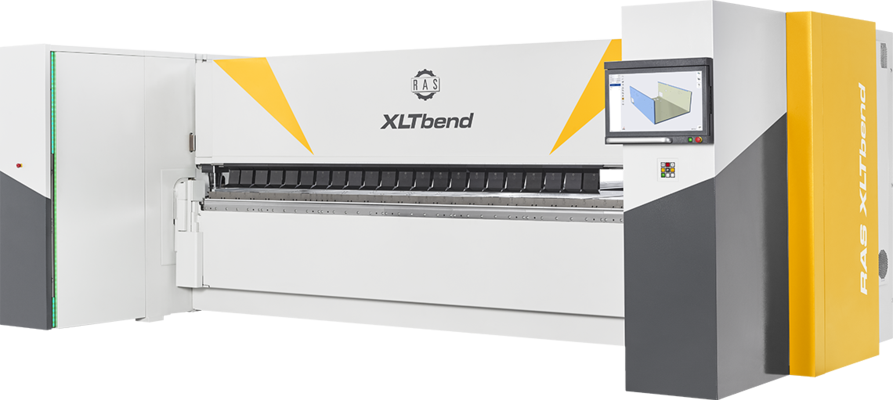
XLTbendLong-Format Folding for Precision Sheet Metal Parts
The RAS XLTbend is built for shops forming long panels, cassettes, architectural components, and complex precision sheet metal parts with cleaner handling and consistent bends.
This folder is a strong fit for long-format forming applications where press brake handling becomes slow, awkward, or labor-heavy. It helps shops produce panels, cassettes, trim, covers, and precision formed components with better support during the bend.
Long-Format FoldingPrecision PartsCassettes and PanelsArchitectural MetalComplex GeometryReduced HandlingSheet Support
Best For
Panels and cassettesStrong fit for architectural panels, long trim, covers, and precision folded parts.Workflow
Supported long-part foldingHelps reduce awkward handling compared with unsupported brake forming.Buyer Fit
Precision long partsIdeal for shops where length, consistency, and part support matter.Performance overview
Long-Part Folding Without the Handling Fight
Compare the workflow advantages that matter most before selecting bending length, tooling, automation, controls, and facility layout.
Long-Format Folding
Built around the handling needs of long sheet metal parts.
Precision Part Support
Helps keep long or complex parts supported during the bend.
Architectural Fit
A strong fit for panels, cassettes, trim, and exterior metal components.
Reduced Brake Bottlenecks
Moves awkward long-part work away from slow press brake handling.
Complex Geometry
Supports formed shapes that need consistency and careful handling.
Production Workflow
Helps improve repeatability on high-value folded parts.
Applications
Best-Fit Applications
Use the application fit to decide whether this RAS model belongs in the conversation for your parts, operators, and production flow.
Long Panels
Fold long sheet metal parts that are difficult to handle on a press brake.
Cassettes
Support cassette-style panels and architectural formed components.
Architectural Metal
Produce trim, panels, covers, and exterior metal details.
Precision Folded Parts
Fit parts where bend consistency and clean handling matter.
Covers and Components
Form covers, shells, and component faces with supported workflow.
Long Trim and Profiles
Handle longer profiles that need stable support during folding.
High-Value Parts
Protect value in parts that cannot afford handling damage or inconsistent bends.
Awkward Brake Parts
Relieve bending jobs that become slow or unsafe on a press brake.
Key features
RAS XLTbend Key Features
Focus on the machine details that affect day-to-day forming work: part handling, setup flow, repeatability, and operator confidence.
Long-Part Support
Designed for parts where length and handling drive the buying decision.
Precision Folding
Supports consistent bends on high-value sheet metal components.
Panel Workflow
Well suited for panels, cassettes, covers, and formed profiles.
Cleaner Handling
Reduces the struggle of moving long parts through brake setups.
Architectural Production
Fits the workflow of exterior metal, cassettes, trim, and panels.
Complex Part Fit
Helps shops take on folded components with more geometry and value.
Buyer fit
Why Shops Choose This Machine
The right RAS machine should solve a specific forming problem, not just add another piece of equipment to the floor.
Better Long-Part Fit
Improves workflow for long parts that are hard to manage on a brake.
Less Awkward Handling
Helps reduce the labor fight around long, flexible panels.
Precision Components
Supports clean, consistent folded parts.
Architectural Strength
Strong fit for architectural and industrial panels.
Consistent Complex Work
Helps improve consistency on longer or more complex parts.
Technical specs
Technical Specifications
Final specifications depend on selected model, bending length, material thickness, box height, tooling, automation, control package, and facility layout.
XLTbend
| Specification | Value |
|---|---|
| Machine Type | Sheet metal folding machine |
| Bending Length | Model dependent |
| Material Capacity | Configuration dependent |
| Folding Beam / Clamping | Configuration dependent |
| Application Type | Long panels, cassettes, architectural components |
| Best-Fit Applications | Long-part forming and precision folding |
| Control / Programming | Configuration dependent |
| Tooling / Clamping | Option dependent |
| Facility Requirements | Available by quote |
XLTbend
- Machine Type
- Sheet metal folding machine
- Bending Length
- Model dependent
- Material Capacity
- Configuration dependent
- Folding Beam / Clamping
- Configuration dependent
- Application Type
- Long panels, cassettes, architectural components
- Best-Fit Applications
- Long-part forming and precision folding
- Control / Programming
- Configuration dependent
- Tooling / Clamping
- Option dependent
- Facility Requirements
- Available by quote
Planning documents
Planning Documents
Request the documents needed to plan machine layout, power requirements, tooling, installation, and final configuration.
Request Planning DocumentsProduct Overview
Overview of machine models, options, and available configurations.
Technical Datasheet
Detailed specifications for the selected machine configuration.
Floor Layout Review
Plan machine placement, material flow, access space, and installation requirements.
Power and Facility Requirements
Confirm electrical, air, foundation, rigging, and facility needs before installation.
FAQ
Common Buyer Questions
Confirm the model fit around your parts, material, bending length, handling needs, and facility constraints.
What type of shop is the XLTbend best for?
It fits shops forming long panels, cassettes, architectural components, covers, and precision folded parts.
When is it better than a press brake?
It can be better when the part is long, awkward, or needs support during bending instead of being carried through a brake setup.
Does it help with architectural panels?
Yes. It is a strong fit for architectural sheet metal, cassettes, trim, panels, and long formed details.
What should be reviewed for sizing?
Review bending length, material thickness, part geometry, profile depth, floor space, and material handling.
RAS machine recommendation
Need Help Choosing the Right RAS Machine?
Send us your part drawings, material type, thickness, bend lengths, box dimensions, and production goals. We'll help determine whether this RAS model fits your application or if another panel bender, folder, or forming machine is the better choice.