Machine Type
Semi-automatic bending centerBuilt for controlled panel and box forming with operator-friendly workflow.
RAS Panel Benders
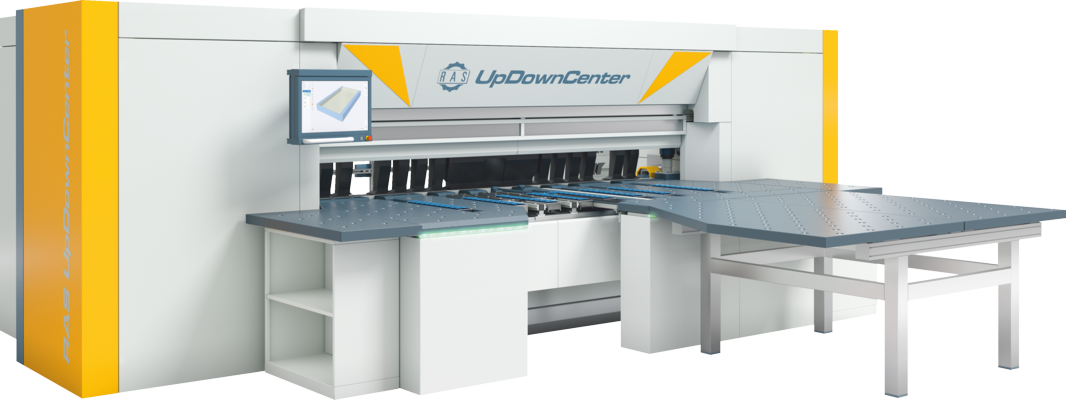
UpDownCenter-2Semi-Automatic Bending Center for Panels and Boxes
The RAS UpDownCenter-2 is built for shops forming panels, boxes, and larger sheet metal parts where up-and-down bending flexibility can reduce flipping, handling, and setup time.
This machine is a strong fit for fabrication shops and manufacturers producing box-style parts, panels, covers, enclosures, and larger formed components. Its up/down bending workflow helps operators form more sides of the part without constantly rotating or repositioning the sheet.
Semi-Automatic BendingUp/Down BendingPanels and BoxesReduced Part FlippingLarge Formed PartsOperator WorkflowBox Height Capability
Best For
Panels, boxes, and larger partsStrong fit for formed components where part handling and bend direction matter.Workflow
Up/down bendingHelps reduce flipping and repositioning compared to traditional bending methods.Buyer Fit
Flexible panel formingGood for shops that need panel bending capability without stepping into a fully automatic system.Performance overview
Flexible Up/Down Bending With Less Part Handling
Compare the workflow advantages that matter most before selecting bending length, tooling, automation, controls, and facility layout.
Up/Down Bending Capability
Forms in both directions to reduce unnecessary part rotation.
Semi-Automatic Workflow
Gives operators controlled bending support without a fully automatic cell.
Box-Style Part Fit
Built around panels, boxes, enclosures, covers, and larger formed components.
Reduced Repositioning
Helps limit flipping and manual handling on multi-sided parts.
Larger Panel Support
A practical path when part size and box height need careful review.
Operator-Friendly Forming
Keeps the bending workflow centered around usable shop-floor control.
Applications
Best-Fit Applications
Use the application fit to decide whether this RAS model belongs in the conversation for your parts, operators, and production flow.
Box and Pan Work
Form box-style parts, pans, covers, and guards with less repositioning.
Panels and Covers
Support repeatable forming of flat-panel components and finished covers.
Enclosures and Guards
Handle multi-sided sheet metal parts where bend direction matters.
Large Formed Parts
Review larger components around bending length, box height, and handling.
Sheet Metal Cabinets
Support cabinet-style work where multiple bends shape the finished part.
Batch Production
A good fit for recurring production batches that need stable operator workflow.
Flexible Bending
Step into bending center productivity without a fully automatic system.
Part-Flipping Bottlenecks
Reduce slowdowns caused by rotating or repositioning awkward panels.
Key features
RAS UpDownCenter-2 Key Features
Focus on the machine details that affect day-to-day forming work: part handling, setup flow, repeatability, and operator confidence.
Up/Down Forming
Bends upward and downward to simplify multi-sided panel work.
Panel and Box Workflow
Designed for the parts that become inefficient when handled repeatedly by hand.
Semi-Automatic Control
Balances operator control with bending center productivity.
Large-Part Planning
Review bending length, box height, part support, and operator access early.
Handling Reduction
Helps reduce the physical handling that slows box and panel forming.
Flexible Shop Fit
A practical fit for shops adding panel bending capability step by step.
Buyer fit
Why Shops Choose This Machine
The right RAS machine should solve a specific forming problem, not just add another piece of equipment to the floor.
Less Flipping
Reduces handling on panels and boxes by bending in both directions.
Efficient Complex Parts
Helps form multi-sided parts more efficiently than repeated manual repositioning.
Larger Components
Supports larger sheet metal components where handling needs planning.
Practical Productivity Step
Adds bending center capability without moving straight into full automation.
Operator Control
Improves control on formed parts that need careful workflow.
Technical specs
Technical Specifications
Final specifications depend on selected model, bending length, material thickness, box height, tooling, automation, control package, and facility layout.
UpDownCenter-2
| Specification | Value |
|---|---|
| Machine Type | Semi-automatic bending center |
| Bending Method | Up/down panel bending |
| Bending Length | Up to 4060 mm where configured |
| Box Height | Up to 400 mm where configured |
| Automation Level | Semi-automatic |
| Material Capacity | Configuration dependent |
| Best-Fit Applications | Panels, boxes, enclosures, larger formed parts |
| Control / Programming | Configuration dependent |
| Blank Handling | Operator-assisted workflow |
| Facility Requirements | Available by quote |
UpDownCenter-2
- Machine Type
- Semi-automatic bending center
- Bending Method
- Up/down panel bending
- Bending Length
- Up to 4060 mm where configured
- Box Height
- Up to 400 mm where configured
- Automation Level
- Semi-automatic
- Material Capacity
- Configuration dependent
- Best-Fit Applications
- Panels, boxes, enclosures, larger formed parts
- Control / Programming
- Configuration dependent
- Blank Handling
- Operator-assisted workflow
- Facility Requirements
- Available by quote
Planning documents
Planning Documents
Request the documents needed to plan machine layout, power requirements, tooling, installation, and final configuration.
Request Planning DocumentsProduct Overview
Overview of machine models, options, and available configurations.
Technical Datasheet
Detailed specifications for the selected machine configuration.
Floor Layout Review
Plan machine placement, material flow, access space, and installation requirements.
Power and Facility Requirements
Confirm electrical, air, foundation, rigging, and facility needs before installation.
FAQ
Common Buyer Questions
Confirm the model fit around your parts, material, bending length, handling needs, and facility constraints.
What type of shop is the UpDownCenter-2 best for?
It fits shops forming panels, boxes, covers, enclosures, and larger parts where up/down bending can reduce handling.
Why choose up/down bending?
Up/down bending helps reduce flipping and repositioning, especially on multi-sided parts that are awkward to handle repeatedly.
Is it a fully automatic panel bender?
No. It is a semi-automatic bending center for shops that want bending center productivity with operator control.
What should be reviewed before purchase?
Review part drawings, bending length, box height, material thickness, operator workflow, floor space, and production volume.
RAS machine recommendation
Need Help Choosing the Right RAS Machine?
Send us your part drawings, material type, thickness, bend lengths, box dimensions, and production goals. We'll help determine whether this RAS model fits your application or if another panel bender, folder, or forming machine is the better choice.